
World Cup Hangover
It's done. Is Atlanta actually going to make money on this thing?

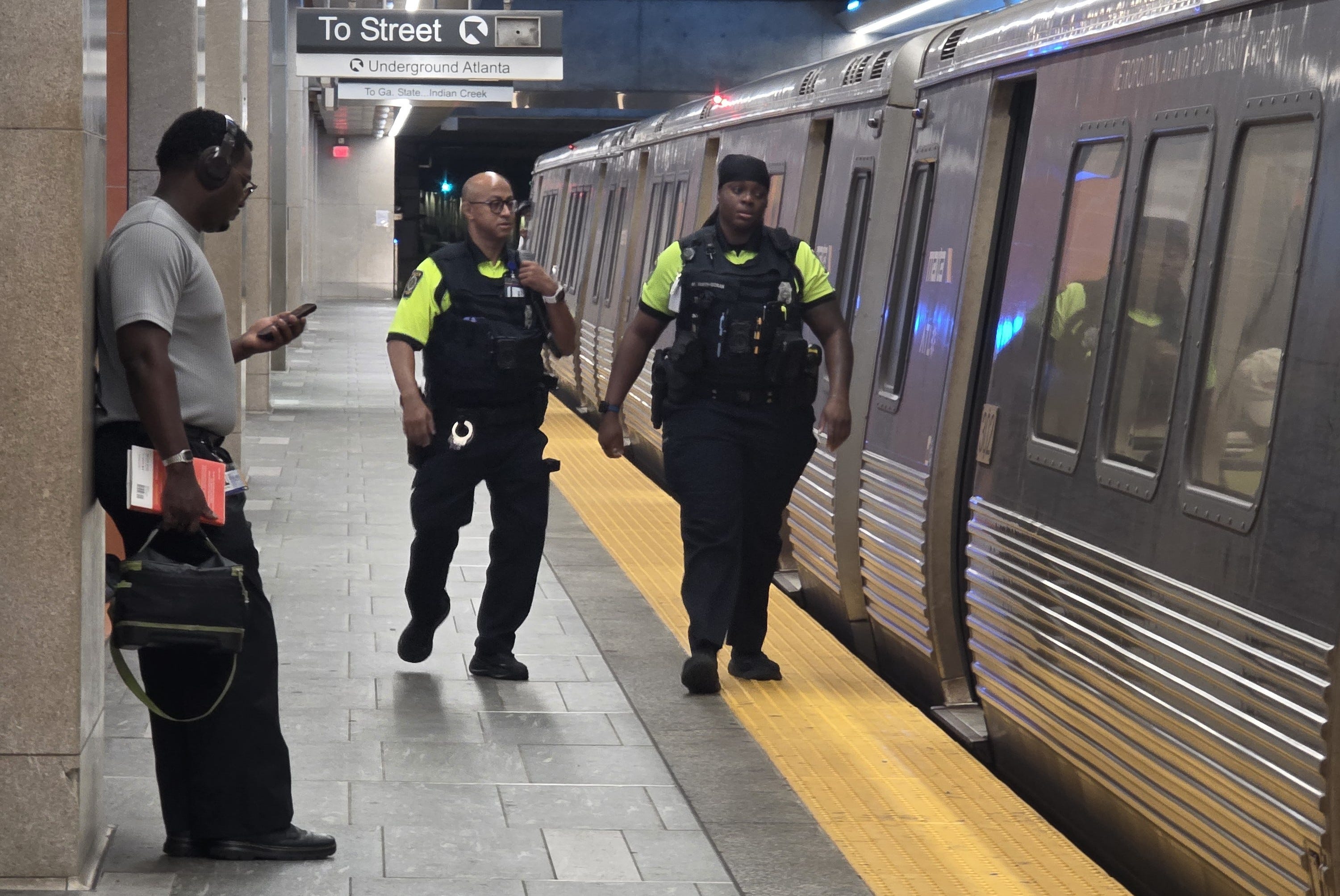
I need to take the train more.
The Democratic Mayors Association held a no-media-allowed meeting at the Westin this week, so naturally I wanted to crash it. It occurred to me as I walked past through Five Points, with a boarded-up MARTA station in the middle of the world cup that tourists would not have seen much of the common cacophony of the plaza on their way to Atlanta stadium. The construction limits the opportunities for panhandlers and street hustlers as much as the heavy police presence might.
MARTA lost 60 percent of its ridership in the pandemic and has only recovered to about half of what it was in the last quarter of 2019. MARTA posted nearly 5 million riders during the World Cup, with volumes doubling and tripling on match days, and nobody died. I see this as an absolute win.
Atlanta is one of the few cities that has managed to capitalize on big events. The 1996 Atlanta Summer Olympics made an operating profit between $10 million and $19 million where other cities lost millions. We also built some lovely dormitories for Georgia Tech, even as it closed public housing projects downtown.
But the city—and MARTA— is in World Cup withdrawal right now. I’m holding my breath and watching south Downtown to see how much of this sticks.
For one, people keep smashing the glass on the new fare gates.
I think about the Chilean street protests that began with an increase in public transit gate fees a few years ago. I’m sympathetic to that instinct. I sense the only reason MARTA charges anything at all to ride the train is a) to draw matching federal dollars and b) to try to keep the kind of people who smash fare gates the hell off the trains and buses.
MARTA has a budget of $1.55 billion or so. But only $68 million of that is passenger revenue. Operational revenue, which includes tag taxes, parking and advertising and junk, gets it to about $127 million.
At any given moment, MARTA has 30 to 45 trains in service, moving between 38 stations, and about 300 sworn officers. Divide the number of MARTA cops by five and that’s about how many are on duty at any given moment: about 60, who also have to cover buses. The logistics are a hard problem, and I do not envy the ops director of MARTA’s police force trying to manage it.
Some of this problem might be solvable by increasing the number of police officers to, say, 450. (This is a thought experiment, friends; save the policing reform pitch for later). An extra 150 cops allow for at least one cop on every train, every day, ensuring that there’s a cop at every station almost all the time. The average MARTA cop makes $61,000 a year. Figure $90,000 with benefits, training and operational costs. The cost is $13.5 million a year, justifiable if it raises ridership by about 20 percent.
MARTA needs people to believe in it if it is to grow. Right now, that’s a problem.
The Fulton County Board of Commissioners just voted to deny an extension of tax allocation districts in Atlanta, which would have paid for the four infill stations Andre Dickens proposed in the state of the city address two years ago. A MARTA station at Krog Street would turn what is already a popular Beltline spot into another Midtown, Maybe the city and MARTA will find money for it somewhere else.
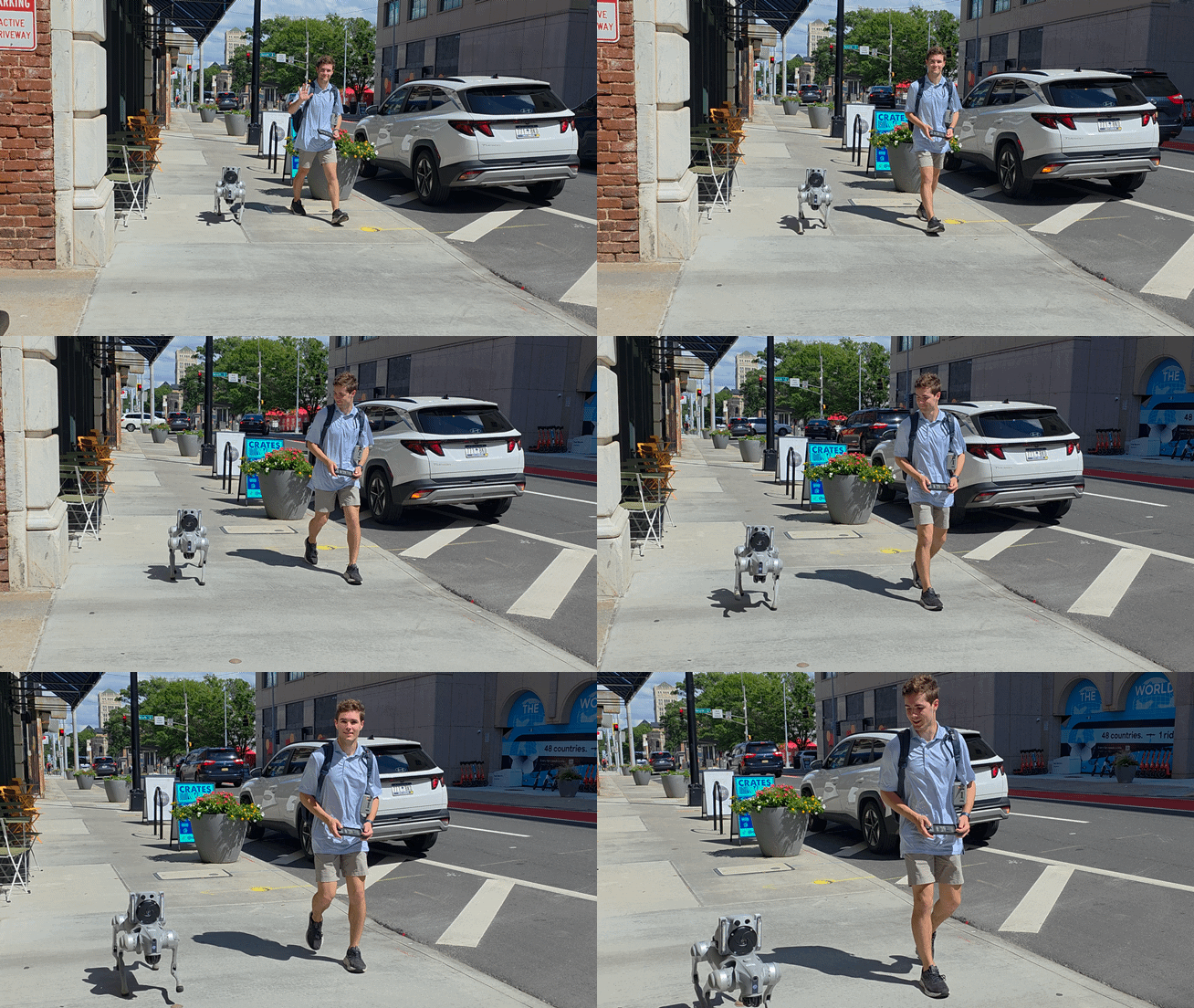
I ran into a teenager taking his security robot for a walk on Mitchell Street a few weeks ago. It turns out that Atlanta Tech Village opened up a second incubator space.
South Downtown—and I will resist calling it SoDo in exactly the same way I reject the gentrifying marketerspeak on the Westside that calls it West Midtown—is really starting to feel like it’s turning a corner. I bought a picturebook for my editor’s kid at Village Books on Mitchell Street. There’s a coffee shop and a Thai place I want to try.
South Downtown’s longstanding problem has been how it empties out at 5 p.m. But on a random Tuesday evening, the new Mexican place on Mitchell Street, El Tesoro, was packed full. The parking lot next to it is now a park.
The scars are still there. The building on South Broad Street that burned in a fatal fire in 2018 is still gutted. Eyedrum isn’t coming back.
Between South Downtown, the Centennial Yards redevelopment of the Gulch near the former CNN Center, and other projects downtown, about 8,500 new units of housing should emerge, said Eloisa Klementich, CEO of Invest Atlanta, on a panel for the Atlanta Leadership Summit in March.
“There are eight key projects that are going to change the trajectory of where we sit we’re sitting right now,” she said, checking off redevelopment of the Civic Center, the Stitch, and Atlanta Underground, among others. “Most of those projects are funded. at least phase one of those projects are funded. So these aren’t projects that are just on a shelf.”
The thing is, we’ve heard all of this before. Underground Atlanta has drawn the Masquerade and now MJQ as club spots, but big promises for redevelopment have been made for it for a long time.
A development firm, South Downtown Atlanta, owns the blocks between Five Points and Mitchell Street, and has poured about $140 million into building out apartments and retail. The Bass Dry Goods Building now has 26 loft apartments in it and a “retail opportunity” on the ground floor, for example.
Those developers announced a “pause” in future development a few days ago, and laid off their development managers while they see what demand looks like.
Former State Rep. Sharon Henderson pleaded guilty to federal fraud charges for taking about $18,000 in pandemic unemployment relief money when she wasn’t eligible.
Henderson’s attorney, the capable former head of Georgia’s NAACP and notable activist Gerald Griggs, argued selective prosecution in court filings. Three state reps have pleaded guilty to pandemic unemployment fraud, all Democrats. Griggs presented no evidence that other elected officials had been treated differently, however.
The details are a window into the political rot of local politics.
Talented people all over metro Atlanta would love to run for public office but live in a district with a long-time incumbent who can raise a six-figure war chest and have deep institutional support or a profile of leadership that makes them seem unassailable. With a few high-profile exceptions—chairman Robb Pitts in Fulton County; Nicole Massiah on the DeKalb county commission, freshman rep Mary Ann Santos in Henry County—virtually every incumbent who ran in 2026 won their primary.
And yet, Henderson managed to beat a 10-year incumbent, Pam Dickerson, in a primary challenge in 2020. Usually, that’s a rare feat attributable to profound political skill, money or an incumbent who is otherwise damaged from scandal or infirmity. None of that appears to be the case here.
Some people will disagree with me for saying this, but I don’t think Dickerson was a leading light in the Democratic legislative firmament while in office. Granted, there’s only so much a member of the political minority can be expected to do. She sponsored legislation on policing reform, and changing the law on citizens arrests. Most of her work involved carrying bills for Newton and Rockdale County leadership. She issued updates from a newsletter. She showed up to hearings.
Dickerson didn’t make waves and didn’t make news.
Nonetheless, she beat Henderson’s limp, no-money-minimal-campaign first primary challenge in 2018 by about two to one. Henderson looked like a vanity candidate, a pastor inflating her resume. Henderson claimed a 30-year banking and finance career, but never seemed to mention which bank she worked for. The court record notes that Henderson worked as a substitute teacher for five days in 2018, and … that’s it.
As the pandemic hit in 2020, Henderson came back and spent about $10,000 on campaign materials (at least, that’s what she reported). Dickerson still outspent her by about two to one. But in the middle of the pandemic, there was no way to hold real forums, and no way to campaign door to door safely: Dickerson, who was 68 in 2020, was vocal about COVID-19 safety.
Dickerson lost by about 150 votes on 11,000 cast, which looks all the more surprising in retrospect.
When you match up the fraud charges with the campaign finance reports, it suggests that Henderson, at the time a “self-employed” 60-year-old who hadn’t worked in at least two years, filed for pandemic unemployment payments and then poured almost all the money into mailers for her political campaign.
It’s nuts. It also worked.
Even accounting for how little the average voter pays attention to down-ballot candidates—and hear me: it’s vibes and name recognition for at least two thirds of voters—it shouldn’t have worked. No state rep should have a record of advocacy and service so ineffectual and dismissible as to open a door to a candidate like Henderson.
I strongly suspect that is about to change, at least on the left. The DSA is hungry. The low hanging fruit is around Macon and Savannah, not metro Atlanta, which is why they’ve escaped so far. But about a third of Democratic voters have begun to self-identify with the DSA now, and they’re going to find the weak links and primary them out.
Bet you anything Mexico City made a truckload of 💵 A truckload filled with 🧱 of colcane, in reality. I was there in 2022 and literally I found myself almost homeless because I was oblivious to the next day's match with Mexico and NO hotel was available. Found ONE Airbnb available, last second, shared with a couple. Awkward.