
A 2026 Democratic Primary Guide for Atlanta
You're still undecided. There's a lot of that going around.

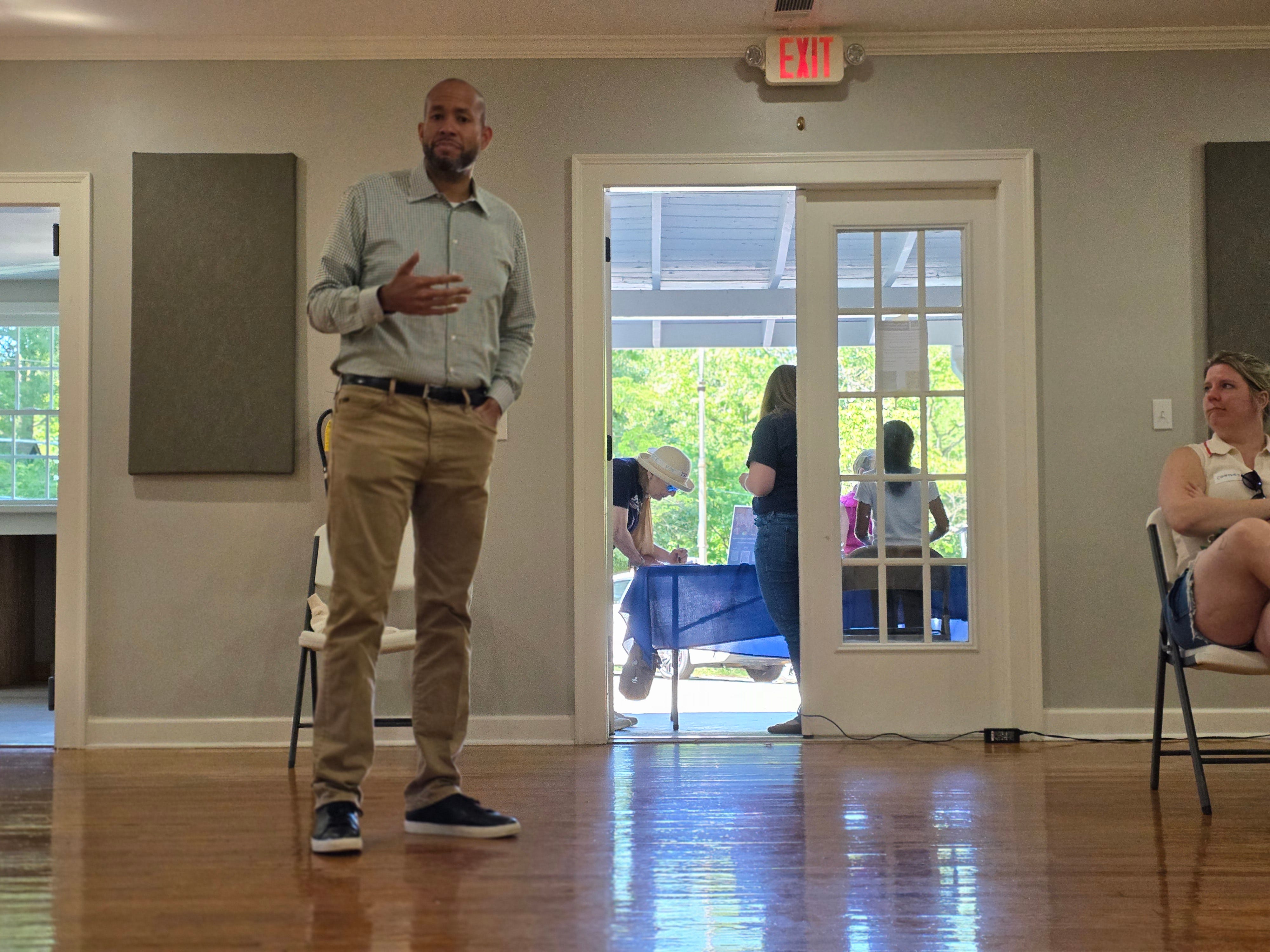
Despite the constant drumbeat of political outrage, a surprising portion of the electorate is undecided about state and local politics, aside from whether they are going to pull a Democratic or Republican ballot. Polling indicates that about 30 percent of Democrats have no idea today who they are going to vote for in the Georgia governor’s race tomorrow.
Don’t feel weird about that; you’re not alone. Pew research suggests that people are increasingly tuning out the news. Voters are increasingly encountering political news more or less by accident as it floats through their social media feed. The problem, of course, is that there is nothing accidental about the algorithm. If you use Facebook, Threads or Twitter as your barometer of news sentiment, you are at the mercy of Elon Musk’s and Mark Zuckerberg’s increasingly malicious, mendacious and self-serving knob-twiddling.
I’m not going to tell you how to vote today … generally. There’s one glaring exception: the Democratic primary for governor, where I must concede some personal biases at this point about both her character and her prospects.
The general consensus in Democratic political circles is that Bottoms is a poisonous general election candidate. The October attack ads write themselves. They are images of a burning Wendy’s, a press conference where Bottoms is quitting her run for mayor to run to Washington D.C. instead, and Secoriea Turner’s face.
The men who murdered Turner also assaulted me two weeks before her death. I have asked Bottoms’ team, repeatedly, for a conversation and interview, which have been ignored. She has generally declined any media appearance she doesn’t tightly control.
She is in first place because half the electorate is checked out.
It is unclear whether she is going to win a plurality among Atlanta voters. She’s cashed in her favors with the DNC and the Biden Administration, with Gavin Newsom and Biden’s vocal support. But it is telling that none of the county commission chairwomen of the five counties around Atlanta, nor Fulton County’s chairman Robb Pitts - who is in the last fight of his political career today - have endorsed Bottoms. No prominent state leader in Georgia has, either. The reason for that is simple: as soon as it becomes clear who she will face in the inevitable runoff, there will be a near-unprecedented dog pile as the anyone-but-Bottoms movement coalesces around whoever comes in second.
With that said: a look at the candidates, from the governor’s race down to the PSC. I’ll try to get something to you about state house races tonight.
The Georgia Supreme Court and Appellate Court
But before we do anything else: these court races may mark a historical inflection point.
State supreme court races are nonpartisan. The winner is determined on this ballot, not in November. For the last two decades or so, more Republicans than Democrats have pulled ballots in May, and thus the entire court is composed of Republicans. This may be the year that changes.
Jen Jordan and Miracle Rankin are Democratic candidates for the high court. Will Wooten, a deputy district attorney in Fulton County, is a candidate for the court of appeals. None will be identified on the ballot as Democrats, but the attack advertising on TV and social media is doing the job of pointing out the Supreme Court incumbents who are currently considering whether to uphold the state’s six-week “heartbeat” abortion ban.
Early voting is up by about 20 percent this year, and Democrats have a 56,000 or so ballot edge going into Tuesday. I expect turnout tomorrow to be within 100,000 votes of a million.
In 2022, Republicans blew Democratic nonpartisan judicial candidates out of the water, because the Democratic primary was noncompetitive for governor and the U.S. Senate. Republicans in 2022 cast about three ballots on election day for every two they cast early, while Democrats went close to even.
If that holds tomorrow, Jordan, Rankin and Wooten will get smoked. But if this really is a year of Democratic anger, and the competitive primary draws out more voters, they could begin changing the composition of Georgia’s courts.
Governor
Polling suggests there are three viable candidates running for second place tomorrow: former lieutenant governor Geoff Duncan, former state senator Jason Esteves and former DeKalb County CEO Michael Thurmond. Other candidates—some laudable, some laughable—are also running, but consider that the difference between second and third place is likely to be under 10,000 votes on a million ballots cast.
Jason Esteves appears to be the choice of the Internet commentariat as well as many Atlanta-area Democratic political activists, and has raised enough money to run TV ads across the state. Esteves is an Emory Law grad and former Atlanta school board chairman who guided the system through the pandemic (I interviewed him about that some years ago), who also owns a couple of Flying Biscuit franchises in Macon and Columbus. You can read or listen to my interview with him as he was contemplating a run last year. He also visited Pine Lake last month, which makes him a lock in my town. I asked him what he had learned after a year of campaigning. The short answer is that need doesn’t have a party: conservatives and liberals tend to have the same problems. “People need a reason to vote for a Democrat other than Trump,” he said. He began his primary campaign with a tight focus on working-class problems in Georgia and listening to people outside of his Atlanta base, while eschewing the anti-Trump drumbeat, and that hasn’t changed.
I first met Geoff Duncan in Fani Willis’ lobby, where we had both been subpoenaed in the Trump case. I brought that up with him in an interview for the Guardian last month; he had forgotten. Duncan, a former Republican lieutenant governor now running in the Democratic primary, will surely see that history cited as the reason he either places tomorrow, or doesn’t. He’s a former baseball player and venture capital guy who I might best describe as an institutional politician. He is exactly the guy who would have been switching from the Democratic Party to the Republican Party in 1994 as the electorate shifted in the south. He wants the trains to run on time, relationships to be respected and the rules—both spoken and implied—to be obeyed. There’s a lot of skepticism about his 180-degree pivot on abortion among Democratic voters. Duncan’s candidacy offers that skepticism as a political weapon in the general election. Will Republicans consider voting for a Democrat who might still be aligned with their political values? Ask Brad Raffensperger.
Michael Thurmond’s political and personal biography are highly qualified: Thurmond is a former labor commissioner—the first Black Georgian elected to statewide office since Reconstruction, and one of the last Democrats to do so—who also steered the DeKalb County school system out of catastrophic board scandals a decade ago. Thurmond is a friend, and I sincerely regret not having been more aggressive about following his campaign. But he has been reminding me of that error constantly in media advertising—I see his face every day, telling me he is going to cut the sales tax in half. That message appears to be resonating, leading to a marked improvement in his polling numbers that could carry him into a runoff—or beyond—if the momentum peaks tomorrow. Thurmond, DeKalb County’s former CEO, led the county for eight years where it managed to stay out of headlines for once. I note in passing that the revelations about unaddressed sewer problems leading to big water rate increases emerged after the new CEO, Lorraine Cochran-Johnson, checked the books after he left.
State Rep. Derrick Jackson represents a Fayette County district. He’s been a state rep for 10 years and retired from the U.S. Navy. He is campaigning on a pledge to raise the minimum wage to $20, eliminate income taxes for nurses, teachers and retired military veterans, and repeal Georgia’s six-week abortion ban.
Olu Brown is a pastor from Peachtree City who may as well be running as a marketing platform for Impact Church, because he has no business in the race.
Amanda Duffy, who describes herself as a “neurodivergent working-class mom,” has no political experience and is running “to give volume to the voices of the lower-middle-class families like mine that are consistently stuck in financial survival mode.”
Lieutenant Governor
This election was going to be State Sen. Josh McLaurin in a walk until State Sen. Nabilah Islam Parkes stepped in at the last minute. I count both as friends. I note that there are unusually bad feelings about Islam’s entry into the race among the Democratic legislative membership, almost all of whom endorsed McLaurin in the days following Parkes’ departure from office.
Josh McLaurin has represented north Fulton County in both the state Senate and House, beginning in 2019. He is, infamously, the former law school roommate of J.D. Vance, and one of his sharpest critics. McLaurin is campaigning to use some of the state’s surplus to offset costs for working families, and is an absolute martinet on labor rights and Medicaid expansion. He and Esteves are closely aligned politically and temperamentally; both are young challengers of Democratic gerontocracy and advocate a muscular do-something progressivism. McLaurin has made a habit over the last year of being quietly present as an observer of important public events. I saw him with fired CDC workers and at No Kings marches, listening more than talking. But when he speaks, he is hilarious: McLaurin could credibly guest host for John Oliver on Last Week Tonight. He has also outraised Islam about two to one.
Nabilah Islam Parkes—I still want to call her Billie Islam—is a longtime Democratic Party operative, and one of the key engineers of the flip of Gwinnett County from Republican to Democratic control. Parkes’ campaign also focuses on expanding Medicaid, capping drug costs, lowering insurance prices, and expanding school funding. In the 2022 race for an open state senate seat, she defeated a long-serving Democratic state representative, Beth Moore, by 78 votes in a contentious race that has not been forgotten by the party’s legislators. Parkes became the youngest woman ever elected to Georgia’s state senate, the first South Asian woman (she’s Bangladeshi-American) and the first Muslim. We thought she was going to run for insurance commissioner, which I think she would have won in a walk (no offense, Clarence). She switched at the last minute—like, at qualifying—to the lieutenant governor’s race, then quit her senate seat so she could legally solicit campaign funds.
Richard Wright, an Atlanta nonprofit leader and pro-weed candidate, is also running, but isn’t really a factor in this contest unless he drives it down into a runoff.
Secretary of State
As a democracy reporter, this contest may matter to me personally more than others. But I would remind you of what the secretary’s actual job is here: administer elections, but also administer trademarks, business and charitable organization filings, professional licensing, and combat fraud in financial services. If Georgia wasn’t constantly under the threat of federal agencies screwing with our elections, I might have more to say about that last bit: fraud today is a menace with no answer in sight.
Dana Barrett is a former radio host and firmly in the “I’m here to fight Trump” wing of the Democratic Party. She was ready to go to jail in order to keep an election denialist off the Fulton County Board of Registration and Elections last year. She is running to secure elections, streamline licensing, and protect seniors from cyberfraud.
Penny Brown Reynolds is a former state court judge and former acting Assistant Secretary for Civil Rights at the United States Department of Agriculture. She talks often about the erosion of public trust in elections and fighting disinformation. She is also a pastor and her campaign is infused with religious overtones that are laser-targeting a primary electorate that favors religious Black women. She has a 3-2 fundraising advantage on Barrett.
Adrian Consonery Jr. and Cam Ashling are lower-tier candidates, neither of whom have meaningful political experience, a high public profile or money. Sorry guys.
Attorney General
Two names familiar to Democratic politics in Georgia emerge here: Tanya Miller and Bob Trammel. Both have had long and important tenures as state representatives. Both are distinguished attorneys. Miller has an advantage in a primary, all else being equal, because Georgia’s primary electorate favors Black women by about 5-10 points. Of such realities are gerrymandered congressional districts made.
Miller is a state representative and chair of the Democratic House caucus whose district covers a shoestring from Summerhill to College Park. She’s also a former Fulton County assistant DA. Her campaign is framed around civil rights protection, which is evaporating at the federal level and has little to no enforcement in Georgia. Outgoing AG Chris Carr has been actively hostile to civil rights law at the state level. But Miller’s prosecutorial interests and Carr’s are surprisingly aligned: fight gangs, illegal guns and human trafficking, which speaks to a rare political consensus on the importance of these issues.
Bob Trammell served in the Georgia House of Representatives from 2014 to 2021 and succeeded Stacey Abrams as House Minority Leader from 2017 to 2021. He is also running for attorney general on a civil rights platform, along with election integrity, and targeting corporate corruption. Trammell lives in Luthersville, Ga., a tiny town about 90 minutes southwest of Atlanta. He was one of the last white Democrats standing in rural Georgia, and a powerful voice for progressive values in rural communities. The threat of that to Republicans drew a massive ratf—ing backlash in 2020, when the RNC burned $1 million to spoon him out of office.
Agriculture Commissioner
And now we get down to the races where no one will remember the name of the person they voted for without a prompt, 30 sections after they walk out of the booth. Whoever wins this race and the ones further down the list are counting on a Democratic wave to get into office. Democrats are fielding two candidates in the primary, neither of whom I have ever heard of before. Sedrick Rowe appears to be the more serious of the two, but only because he has raised a bit more than $10,000 to Katherine Juhan-Arnold’s $200 or so. But power to her for somehow tying Democratic voter angst about data centers into her campaign.
Katherine E. Juhan-Arnold founded a health food nonprofit—Baby Katie’s Pharm & Kitchen—and is pledging to do an agricultural impact screening for data centers and other large developments. She is campaigning on long-term sustainable farming and support for small farmers.
Sedrick Kent Rowe Jr. worked in the Obama administration on the committee advising minority farmers, and grows organic peanuts as a farmer and scientist. Rowe’s priorities are to modernize disaster relief for Georgia farmers, cut food costs with “smarter” agriculture and to address food deserts by directly connecting farmers to communities and schools.
Insurance Commissioner
Full disclosure: I voted for John King in 2024. I’ve known him for years and admire his generally forthright approach to the job. But he turned me down for an interview last year, so you’re on your own now, John. Good luck.
The insurance landscape in Georgia is bought and paid for by the insurance industry, which engineered sweeping legislative changes to the code last year to protect car makers from two specific lawsuits that were going to end in billion-dollar judgments. Any insurance commissioner has to contend with that kind of influence.
Second full disclosure: Clarence Blalock and I are friends, in the “we talk once or twice a month, usually” type of friendship. I have found him to be an unusually sharp statistician and analyst who can see around corners. If he wins, I will be insufferable. Blalock is a longstanding Democratic political operative—a data guy on the Democratic Party of Georgia’s Coordinated Campaign—who worked for Smyrna for five years. He ran against Marjorie Taylor Greene in 2024, losing in the primary. Blalock managed Peter Hubbard’s successful race for the PSC, the first statewide Democratic win in forever. He is quirky and filled with policy nerd energy.
AJ Jain appears to be leading the money race—appears, because Keisha Waites is blowing off disclosures, as usual. Jain is an insurance executive, nonprofit founder, and former college professor, and would be one of the first people with actual industry experience in the role in a long time. Usually, the person who wins this primary does so because they’re good at politics, not insurance. Jain is focusing on consumer protection, market oversight, and expanding access to affordable coverage.
Keisha Waites is a problem. Full stop. She might win the primary on name recognition: she is a former state representative who served briefly on the Atlanta City Council. But we don’t know who is funding her right now, and she has been involved directly and indirectly in some fairly dirty politics. She has racked up thousands in fines for failing to file campaign disclosures and misusing government money to campaign for public office.
DeAndre Mathis, chair of the South Fulton Zoning Board of Appeals, is campaigning on an interesting premise, to raise awareness of the way insurance rates tied to zip code and credit score amounts to modern day racial discrimination. Mathis has been both an insurance agent and tax accountant.
Thomas Gabriel Dean is … a dude on the ballot with no filed disclosures and no campaign website. Whatever, man.
Labor Commissioner
Job discrimination is real. It explains much of the racial wealth gap. Black people are the first ones fired in an economic downturn and tend to be unemployed for 50 percent longer than white people of equal experience. That makes mortgages fail, and knocks back homeownership rates because Black employment tends to be more precarious.
In a just world, our elected officials would be trying to solve that problem. Today, at least among Republicans, they get very mad at your and call you names when you point it out to them. There are five Democratic candidates running for labor commissioner tomorrow. I have less visibility on how this is going than I’d like, but I suspect Brett Hulme has the inside track right now.
Brett Hulme is a union organizer who served as president of the Trades & Labor Assembly for 16 years and is political director for the Southeastern Carpenters Regional Council. He leads the fundraising race, with almost all of his backing coming from labor unions. He has the endorsement of the UFCW local, Georgia Equality and the AFL-CIO, among others.
But … Christian D. Smith, an Atlanta civil rights attorney and former Fulton County prosecutor has once again arisen from wherever he stays in between election cycles, and has raised nearly as much money. Smith challenged Fani Willis in 2024, and an able candidate might have had a shot at her. Smith is not that candidate.
Two sleeper candidates may emerge to take this to a runoff. Michelle “Michi” Sanchez is an old friend and north Georgia activist who has been a Democratic Party operative for many years. She is, perhaps, the best positioned to speak to immigrant labor issues right now. But … file your disclosures, Michi. And Nikki Porcher and I had a lovely chat you can read. Porcher, who founded Buy From a Black Woman in 2016, is coming at the job from the perspective of antidiscrimination law and support for small businesses. And as I’ve mentioned, there is a small but significant edge for Black women in Georgia primaries.
Superintendent of Schools
We are in the midst of a legislative revolt over education outcomes today. Something among Republican lawmakers fundamentally shifted in 2026, with lawmakers demanding better results on math and literacy. It’s part of a broader conservative focus on classroom disciplinary issues, particularly cellphone use in schools, which were banned in high schools this year. They’re looking at how much improvement Mississippi and Florida have made over the last decade and wondering what Georgia is doing wrong. Richard Woods, the incumbent Republican school superintendent, has four Republican challengers and is likely to lose his primary; such is the state of general discontent.
The Democratic field would say underperformance can be laid upon the generally underfunded state of public schools, along with pandemic overhang. Democrats have a good primary contest this year; there are no sluggards in the field. None of them suck. But Otha Thornton has to be considered the favorite simply from name recognition as the 2022 nominee, never mind how he has been endorsed by most folks who do the endorsing.
Otha Thornton is a retired lieutenant colonel and a former National PTA president. He was the 2022 Democratic nominee for state superintendent but lost to Woods. He is echoing some of the “back to basics” rhetoric that is circulating in conservative circles.
Anton Anthony serves as Superintendent of Hancock County Schools in Sparta and has worked all over the state as a teacher, principal or administrator. He is also a pastor. He’s pushing career and technical pathways—the trade route from high school.
Lydia Catalina Powell is an assistant principal at Hampton High School in Henry County, and she has been pressing for better access to early learning and integrating mental health services in school.
Public Service Commission, District 5
Peter Hubbard, who serves in District 3, is unopposed and the only Democrat elected to a statewide non-federal seat in Georgia right now. This election will let us know if that was an off-year irregular election fluke or not. If the Democratic primary winner prevails in November, Democrats will have a board majority for the first time in decades.
The PSC governs utilities in Georgia and the fight over data centers is starting to look like a cross-party bellwether issue. Georgia Power has been flexing its lobbying muscle and public relations machine to get in front of the mob. It has frozen rate increases for three years. But I question if it will work long term, because the data center issue is at least as much about job displacement and legal liability as it is about power rates and environmental issues. Net metering debates about solar power are starting to look quaint in comparison.
Angela Pressley, Craig Cupid and Sheila Edwards are running for District 5. This is a statewide election, even though they represent one section of the state. All three have data centers and the potential cost to ratepayers on their agenda.
Angela Pressley teaches at Clark Atlanta University and is a sustainability consultant. Touting herself as the “technical clean-energy” expert in the race, she’s making the most explicitly climate-focused argument among the candidates.
Craig Cupid is a Georgia Tech engineer and attorney who has worked on intellectual property law. He is carefully messaging that the PSC can’t actually stop a data center from being built, but can regulate the power company supplying it. He’s also married to Lisa Cupid, the Cobb County commission chairwoman, which suggests that he can tap into her political network. In a down-ballot race, having a voting nexus in metro Atlanta might be enough.
Sheila Edwards won the primary in 2022 before the entire election was rescheduled because of a court challenge to the voting process. She has also not filed her campaign finance disclosures.
Just wanted to add that Katherine E. Juhan-Arnold SAYS she will do an impact screening on data centers, but I just looked into her further and she has been working for Google Data Center Services. So, what will come AFTER the impact screening? She never says anything about that. They have been her client since 2024, under the Rohadfox corporation. She stood out to me as a great candidate until I continued my research on her. Now, she reeks of corruption. A yucky individual it seems